
Spending years at a desk may seem harmless, but repetitive posture and limited movement gradually change how your shoulders function. What begins as mild stiffness can develop into chronic pain, weakness, and reduced mobility. Many professionals in their 40s and 50s seek physical therapy in Frisco TX only after discomfort starts affecting sleep, workouts, or daily activities.
At S2S Functional Performance, the goal isn’t just temporary relief, it’s correcting the root cause so your shoulder becomes stronger and more resilient over time.
1. Constant Dull Ache in the Front or Top of the Shoulder
Symptom: A persistent, low-grade ache at the front or top of the shoulder that builds throughout the workday and lingers even during rest.
Cause: Desk work keeps your shoulders rounded and internally rotated for hours. Over time, chest muscles tighten while mid-back and rotator cuff muscles weaken. This imbalance reduces joint space and compresses tendons, often leading to shoulder impingement and ongoing irritation.
Solution:
- Strengthen rotator cuff and mid-back muscles to restore the balance between opposing muscle groups
- Improve thoracic spine mobility to reduce the strain placed on the shoulder joint
- Stretch tight chest and anterior shoulder muscles daily to open up compressed spaces
- Perform posture correction drills consistently to retrain how you hold your shoulders at rest
- Follow a structured rehab plan through physical therapy in Frisco TX for lasting mechanical correction
Correcting these mechanics relieves pressure on irritated tissues and restores proper joint movement.
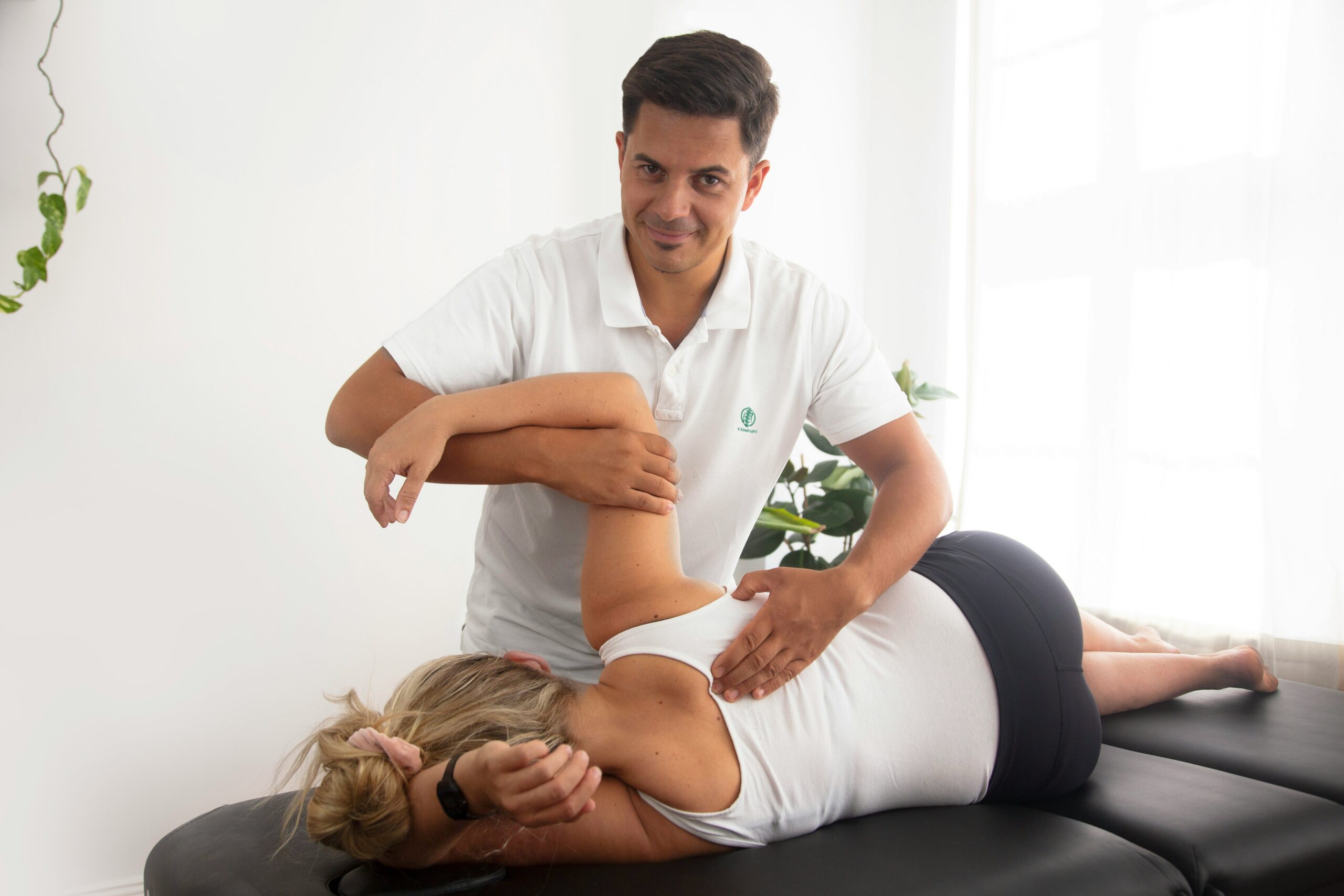
2. Sharp Pain When Reaching Overhead
Symptom: A sharp, pinching sensation when lifting the arm overhead, whether reaching for a shelf, putting on a jacket, or pressing weight in the gym.
Cause: Limited overhead movement during long workdays reduces shoulder mobility over time. Poor scapular control causes the shoulder blade to move improperly, pinching tendons during elevation. Left unaddressed, this creates chronic inflammation and progressive weakness.
Solution:
- Begin with scapular stabilization exercises to rebuild proper blade control before loading the shoulder
- Gradually reintroduce overhead movements with controlled, progressive loading
- Strengthen the lower traps and serratus anterior – the key muscles that guide the scapula
- Improve core stability, which provides the foundation for safe shoulder function
- Integrate structured movement training like Pilates classes Frisco to develop coordination alongside strength
Restoring the coordination between the shoulder blade and arm reduces friction and eliminates the pinching sensation over time.
3. Tightness or Burning Between the Shoulder Blades
Symptom: A nagging burn or ache between the shoulder blades that worsens as the day goes on, often paired with a sense of heaviness or fatigue in the upper back.
Cause: Forward head posture overstretches the upper back muscles, forcing them to work constantly just to hold your head upright. These chronically fatigued muscles develop trigger points and tension. Weak deep stabilizers fail to share the load, worsening the imbalance over months and years.
Solution:
- Incorporate thoracic spine extension mobility drills to counteract hours of forward flexion
- Build postural endurance through strengthening exercises – not just flexibility work
- Activate the deep core to reduce the burden placed on upper back muscles
- Address trigger points through manual therapy to release accumulated muscular tension
- Progress to a long-term strengthening program at S2S Functional Performance to prevent recurrence
Improved muscular endurance allows your upper back to maintain posture without the constant fatigue and burning.
4. Shoulder Pain That Worsens at Night
Symptom: Pain that intensifies when lying down, particularly on the affected side, disrupting sleep and leaving the shoulder feeling stiff and sore in the morning.
Cause: Chronic strain inflames rotator cuff tendons and surrounding tissues. Lying down increases pressure within the joint capsule, making symptoms more noticeable at night. Poor circulation from prolonged sitting also slows tissue healing, keeping inflammation from fully resolving between days.
Solution:
- Follow progressive tendon-loading exercises to rebuild tissue tolerance and reduce reactivity
- Modify sleep positions to minimize compression on the affected shoulder
- Manage inflammation through guided rehab rather than relying solely on rest or pain relief
- Avoid sudden spikes in activity that can re-aggravate already sensitive tissue
- Early support from fit physical therapy Frisco TXprofessionals can help manage symptoms before inflammation becomes chronic.
Addressing inflammation early prevents the gradual degeneration that makes night pain harder to treat over time.
5. Clicking, Popping, or Weakness in the Shoulder
Symptom: Audible clicks or pops during arm movement, often accompanied by a sense of weakness or instability – particularly when lifting, pushing, or rotating the arm.
Cause: Years of poor mechanics can lead to instability or minor labral irritation. Weak stabilizers allow small, uncontrolled shifts in the joint during movement. When clicking is combined with pain or weakness, it signals reduced neuromuscular control – the shoulder is no longer moving with precision.
Solution:
- Start with a comprehensive movement assessment to identify the exact source of instability
- Perform targeted stability and coordination drills to rebuild neuromuscular control
- Progress to functional strengthening that mimics the demands of daily tasks and activity
- Follow a structured return-to-activity program to rebuild confidence gradually
- Maintain gains with ongoing performance training to prevent recurrence long-term
Building joint stability improves movement confidence and significantly reduces the risk of reinjury.
Why Are Desk Workers Over 40 More Vulnerable to Shoulder Problems?
After 40, muscle mass gradually declines and connective tissue becomes less elastic. Recovery slows, and long-standing imbalances that were once compensated for begin to surface as pain. If strength training and mobility work have been neglected for years, symptoms tend to accumulate and become noticeable in midlife often all at once.
This is why proactive care through physical therapy in Frisco TX is essential rather than optional. Waiting for pain to become severe before seeking help significantly extends recovery time.
How Can You Prevent Chronic Shoulder Pain From Returning?
Consistency is what separates temporary relief from lasting results. Strength training two to three times per week, combined with daily posture reset exercises and thoracic and shoulder mobility work, creates the foundation for a resilient shoulder. Maintaining strong core stability and incorporating structured movement programs like Pilates classes Frisco ensures the entire kinetic chain supports healthy shoulder mechanics long-term.
Is Chronic Shoulder Pain From Desk Work Reversible?
Years of desk work do not automatically mean lifelong shoulder pain – but without corrective action, chronic irritation and weakness will continue to worsen. The shoulder is designed for movement, stability, and strength. When posture, mobility, and muscle balance are compromised for years, pain becomes the body’s warning signal that something needs to change.
The good news is that desk-related shoulder pain is highly treatable. With targeted strengthening, mobility restoration, and guided rehab at S2S Functional Performance, you can correct dysfunction, rebuild durability, and return to pain-free movement. If your shoulder pain has lasted more than a few weeks or is affecting sleep and daily function, early intervention can prevent long-term damage.
FAQs
1. Can desk work permanently damage my shoulder? Long-term imbalance can lead to tendon degeneration, but early correction significantly reduces permanent damage.
2. How long does recovery take with physical therapy? Most desk-related shoulder issues improve within 6–8 weeks with consistent strengthening and mobility work.
3. Are ergonomic changes enough to fix shoulder pain? Ergonomics help reduce strain but do not rebuild strength or mobility. Corrective exercise is essential.
4. Is shoulder clicking always serious? Clicking without pain is often harmless. Clicking with pain or weakness should be evaluated.
5. Do Pilates classes help chronic shoulder pain? Yes. When properly guided, Pilates improves posture, scapular control, and core stability, which reduces shoulder stress.