Are You Stuck in a Workout Rut Without Realizing It?
Most people who exercise regularly take pride in their consistency and rightly so. Showing up every day, running the same route, lifting the same weights, and following the same routine feels productive. But here’s the uncomfortable truth: doing the same workout repeatedly isn’t consistency it’s stagnation. When your body faces identical stress day after day, it stops adapting, you stop progressing, and you quietly set yourself up for injuries that seem to appear out of nowhere. If you’ve ever wondered why your results have plateaued despite regular effort, the answer often comes down to one missing element: variability. At S2S Functional Performance, a trusted name in physical therapy Frisco athletes and active individuals rely on, this is one of the most common performance gaps identified during movement assessments.
What’s Actually Causing Your Body to Stop Responding?
The science behind training plateaus is straightforward. Your muscles, joints, and nervous system are incredibly adaptive. When exposed to a new movement or load, they respond by getting stronger, more coordinated, and more resilient. But once the body has fully adapted to a specific stimulus, that same movement no longer triggers meaningful change. Repeating identical exercises with the same intensity, volume, and range of motion removes the challenge your body needs to keep evolving.
Several patterns tend to drive this. Many people rely heavily on one type of training, such as distance running, bench pressing, or machine-based circuits while neglecting opposing muscle groups or different movement planes. Others avoid certain movements out of discomfort or fear, which quietly creates muscular imbalances over time. Some simply were never taught that varying tempo, load, rest periods, or movement patterns matter just as much as showing up consistently. Without the guidance of a qualified professional in physical therapy in Frisco, it’s easy to fall into these habits without realizing the long-term cost.
What Happens If You Keep Ignoring Workout Monotony?
Repetitive, unvaried training is one of the leading contributors to overuse injuries, stress fractures, tendinopathies, rotator cuff problems, IT band syndrome, and chronic low back pain, among them. When the same tissues are loaded in the same way repeatedly, without adequate recovery or stimulus variation, micro-damage accumulates faster than your body can repair it. Over time, what started as a minor inefficiency becomes a full-blown injury that sidelines you for weeks or months.

Beyond physical injury, monotonous training also leads to neuromuscular inefficiency. Your nervous system stops being challenged, which means your coordination, balance, and reaction time plateau alongside your strength. You become highly fit at one thing and fragile everywhere else. For anyone with active lifestyle goals, whether a competitive athlete or a weekend warrior, this is a serious limitation. Many of the clients who first walk into S2S Functional Performance seeking physical therapy Frisco care are dealing with exactly this kind of accumulated, preventable breakdown. The injury was the symptom; the lack of training variability was the root cause.
How Can You Introduce Smarter Variation Into Your Training?
The good news is that fixing this doesn’t require reinventing your entire routine. Effective workout variability isn’t about doing something random every session it means systematically cycling through different stimuli in a way that builds intelligently on prior adaptations. Here’s what that looks like in practice:
- Vary your movement planes. Most routines are dominated by forward-and-back (sagittal plane) movements. Adding lateral and rotational exercises trains the stabilizing muscles that protect your joints in real-world situations.
- Change your tempo and loading patterns. Slowing down the lowering phase of a lift or periodizing your weights over four to six weeks keeps your muscles genuinely adapting rather than just going through the motions.
- Incorporate dedicated mobility and stability work. These aren’t just warm-up exercises; they fundamentally change the quality and safety of every movement you perform under load.
- Alternate between intensity zones. High-intensity sessions need to be balanced with lower-intensity recovery work. Active recovery keeps the neuromuscular system engaged without piling on fatigue.
- Introduce unilateral training. Single-leg squats, single-arm presses, and split-stance movements expose muscular asymmetries that standard bilateral exercises tend to mask entirely.
The challenge most people face is knowing how to sequence these variables in a way that aligns with their injury history, movement capacity, and performance goals. That’s precisely where working with the specialists at a facility like S2S Functional Performance, a leader in fit physical therapy Frisco TX makes a measurable difference.
How Does S2S Functional Performance Help You Train With Purpose?
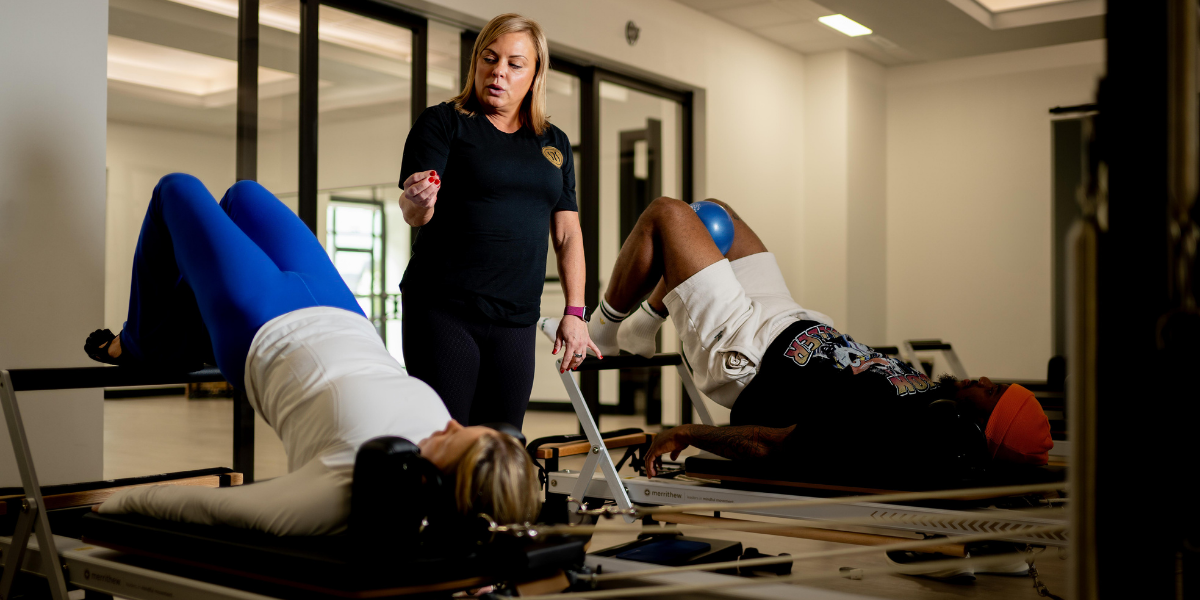
At S2S Functional Performance, the philosophy behind physical therapy in Frisco goes well beyond treating pain after it has already developed. The clinical team works with athletes and active individuals to assess movement quality, identify where variability is missing from their training, and build personalized programming that challenges the body in the right ways at the right times.
Every client begins with a thorough movement screening and functional assessment a process that reveals the compensations, asymmetries, and weak links that standard gym programming never addresses. From there, the S2S team builds a phased training plan that introduces progressive variation in load, movement patterns, tempo, and intensity. This isn’t a generic program pulled from a template. It’s a purposeful, evolving plan designed around how your body specifically moves and what it specifically needs to perform better and stay injury-free longer.
As a recognized provider of physical therapy Frisco residents trust for both rehabilitation and performance, S2S bridges the gap between clinical care and athletic training. Whether you’re returning from a nagging overuse injury or proactively trying to break through a performance ceiling, the team understands that injury prevention and performance improvement are not separate goals they are two sides of the same coin. If you’ve been searching for a fit, physical therapy Frisco TX that delivers results grounded in movement science, S2S Functional Performance is built precisely for that purpose.
Ready to Move Smarter, Train Harder, and Stay Injury-Free?
If your progress has stalled, if recurring pain keeps interrupting your training, or if you simply want the confidence of knowing your workouts are building you up rather than breaking you down, it’s time to work with professionals who understand the full picture of human movement and performance. Visit S2S Functional Performance today and take the first step toward smarter, more sustainable training.
FAQs
1. How often should I change my workout routine to see continued progress?
Most professionals recommend introducing meaningful variation every four to six weeks. This doesn’t require a complete overhaul even targeted changes to tempo, load, movement selection, or rest periods can re-stimulate adaptation and break through a plateau.
2. Can a physical therapist actually help design a better workout program?
Absolutely. Physical therapists are trained in biomechanics, movement assessment, and progressive loading principles. At a facility like S2S Functional Performance, this expertise is applied directly to performance programming, not just injury rehabilitation, so you get smarter training from the start.
3. Is workout variation only important for competitive athletes?
Not at all. Anyone who is physically active benefits from varied training. For recreational gym-goers, older adults, and those managing past injuries, thoughtful variation is especially critical for maintaining joint health, functional mobility, and long-term independence.
4. What is the difference between active recovery and a rest day?
A rest day means complete physical inactivity, while active recovery involves low-intensity movement such as walking, stretching, or light mobility work. Active recovery keeps circulation flowing, reduces stiffness, and gently maintains neuromuscular engagement, often making it more beneficial than total rest for regular exercisers.
5. How is S2S Functional Performance different from working with a regular personal trainer?
S2S combines licensed physical therapy expertise with performance coaching methodology. Their process begins with a clinical movement assessment that identifies risk factors, imbalances, and dysfunction before any programming begins, ensuring your training is not only effective but built on a foundation your body can actually sustain long-term.