
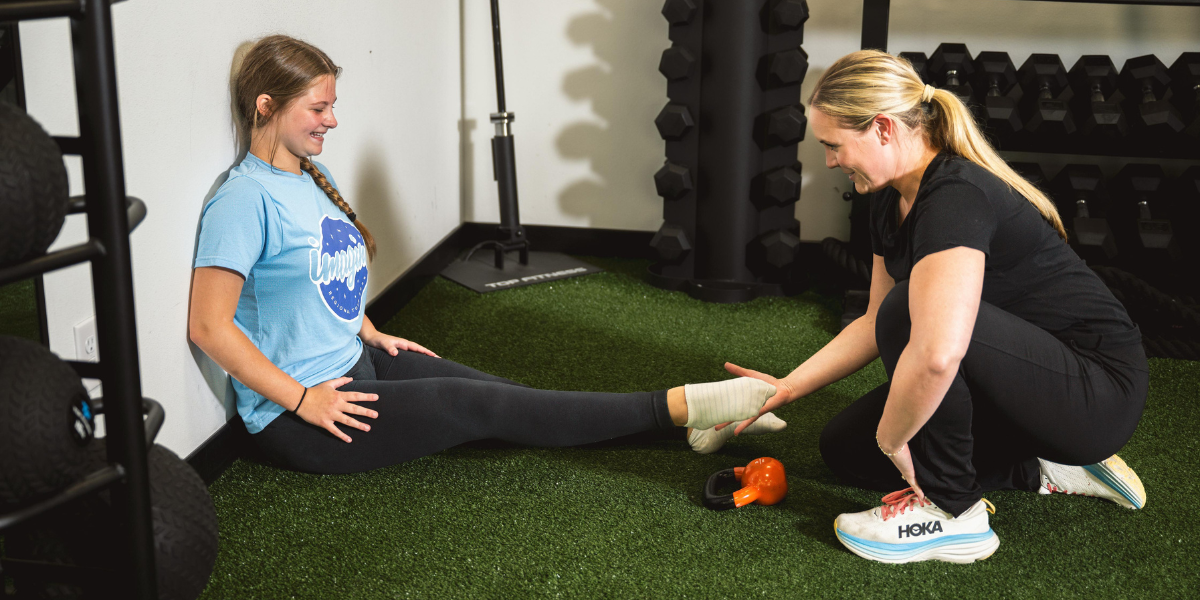
Ankle sprains are the single most common sports injury in high school athletics, and in Frisco, where football, soccer, basketball, and track run almost year-round, they are practically a rite of passage. But here’s what most families don’t realize: the first sprain is rarely the most damaging one. It’s the second. And the third. The re-injury cycle isn’t a coincidence or bad luck. It’s the entirely predictable result of a dangerous gap in the recovery process that athletes, parents, and coaches almost never see coming.
At S2S Functional Performance, our specialists in physical therapy Frisco athletes see this pattern constantly. The good news is that it’s completely preventable when you know what to look for and act before the next injury happens.
Is Your Athlete’s Ankle Actually Healed Or Just Pain-Free?
Pain disappearing is not the same as healing being complete. Most ankle sprains stop hurting within a week or two but the more serious structural and neurological damage continues well beyond that point. Damaged ligaments, weakened stabilizing muscles, and impaired proprioception (the body’s ability to sense joint position during movement) all require significantly more time and targeted work to restore properly.
The “4-week gap” is the critical window between when the pain stops and when the ankle is truly ready to handle full athletic demand again. Most Frisco student-athletes re-enter practice and competition somewhere inside this window feeling fine on the surface, but functionally unprotected underneath. That is precisely when the re-injury happens.
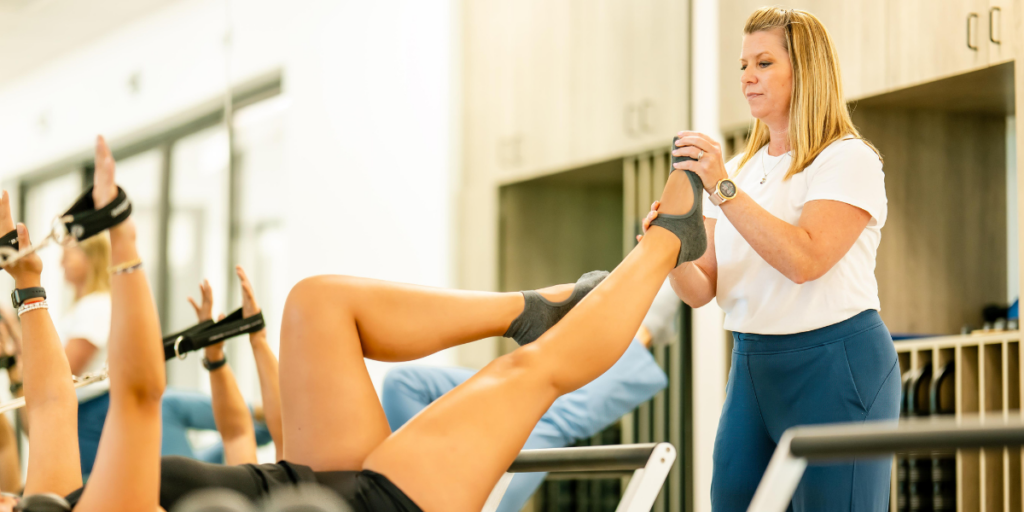
Our team at S2S, known for providing some of the best physical therapy in Frisco, consistently identifies this gap as the root cause behind chronic ankle problems in young athletes. Recognizing it early is the first step toward breaking the cycle.
What’s Really Causing the Re-Injury Cycle?
The reasons Frisco athletes keep re-spraining the same ankle almost always trace back to the same set of overlooked problems:
- Pain-free does not mean sport-ready athletes return to full activity before the ankle’s neuromuscular system has fully recovered
- Skipped rehabilitation rest and ice address pain but do nothing to rebuild strength, stability, or balance
- Proprioceptive deficit the nerve receptors inside the sprained ligament are damaged, leaving the ankle far less capable of self-correcting during cutting, jumping, or landing
- Compensatory movement patterns athletes unconsciously shift how they run and land to protect the sore ankle, creating imbalances that stress the knees, hips, and opposite leg
- Pressure to return quickly in Frisco’s competitive athletic environment, the social and team pressure to get back on the field often overrides sound recovery judgment
- Inadequate support during healing poor footwear, improper taping, or returning to uneven surfaces before stability is restored all compound the underlying vulnerability
What Happens If This Gap Is Ignored And Why Does It Matter So Much Right Now?
A single poorly rehabilitated ankle sprain may not end a season. But ignored repeatedly, the consequences become serious and permanent:
- Each re-sprain causes progressively more ligament damage, creating increasing joint laxity that compounds with every subsequent injury
- Chronic ankle instability (CAI) develops in approximately 40% of athletes who don’t complete structured rehabilitation after their first significant sprain
- CAI dramatically raises the risk of far more serious injuries, including osteochondral lesions (cartilage and bone damage), peroneal tendon tears, and stress fractures
- Chronic discomfort and altered movement mechanics can affect academic focus and overall activity levels
- A visible pattern of recurring injury can affect college recruitment evaluations
- Untreated ankle instability in adolescence is a known contributor to early-onset ankle arthritis in adulthood
The window to intervene effectively is limited. Every week inside the recovery gap without proper rehabilitation makes the next injury more likely and the long-term consequences more serious.
What Treatment Options Can Actually Close the Gap?
Effective ankle rehabilitation goes far deeper than rest, ice, and a resistance band routine. A complete recovery program addresses every dimension of the injury from the inside out:
- Manual therapy, hands-on joint mobilization, and soft tissue treatment to restore full range of motion and prevent restrictive scar tissue from forming
- Progressive strength training targeted loading of the peroneal muscles, calf complex, and hip stabilizers that protect the ankle under real athletic demands
- Proprioceptive and neuromuscular retraining balance drills, perturbation training, and sport-specific movement patterns that rebuild the nervous system’s ability to protect the joint
- Full movement assessment identifying and correcting the compensatory patterns the athlete has developed since the injury, before they become permanent habits
- Criteria-based return-to-sport testing objective hop tests, single-leg stability assessments, and sport-specific movement evaluations that confirm readiness before full competition resumes
- Athlete and family education, building a clear understanding of what complete recovery actually looks like and how to recognize warning signs before re-injury occurs
How Does S2S Functional Performance Actually Close the Gap?
S2S Functional Performance is built differently from a standard clinic. Our approach to physical therapy Frisco TX, athletes and families trust is designed around the individual their sport, their body, their goals, and their timeline. When a student-athlete comes to us with an ankle injury, we don’t just assess the ankle. We evaluate the whole athlete.
Our licensed doctors of physical therapy bring specialized training in sports rehabilitation, movement science, and return-to-sport protocols specifically calibrated for the demands of competitive high school athletics. Here is what genuinely sets S2S apart as a leading provider of fit physical therapy Frisco TX athletes to count on:
- One-on-one care is provided in every single session by a licensed doctor of physical therapy, not an aide or a generalized program
- Whole-body evaluation hip strength, movement mechanics, footwear, and training load are all assessed alongside the ankle itself
- Criteria-based clearance athletes return to the field when they pass objective functional benchmarks, not simply when their pain score reaches zero
- Injury prevention and performance programming, once rehabilitation is complete, we transition athletes into our performance and prevention programs to build the resilience that keeps re-injury from ever becoming a pattern again
- No referral required, S2S offers direct access physical therapy in Frisco, meaning athletes can begin treatment immediately without waiting on a physician’s order, shortening the overall recovery timeline from day one
Ready to Break the Ankle Re-Injury Cycle for Good?
If your athlete has sprained their ankle once or is already on their second or third, the right time to intervene is before the next one happens. The 4-week gap is real, it is predictable, and it is entirely preventable with the right rehabilitation team behind your athlete. Our expert physical therapy Frisco team will build a recovery plan built around your athlete’s actual needs, so this ankle injury is genuinely the last one.
FAQs
1. How do I know if my child’s ankle is truly ready to return to sports after a sprain?
Pain going away is not enough to confirm full recovery. A true return-to-sport clearance requires passing objective functional tests, such as single-leg balance, hop tests, and sport-specific movement evaluations that confirm the neuromuscular system has recovered, not just the pain response. At S2S Functional Performance, our licensed therapists use criteria-based testing to make that determination accurately and safely.
2. Does my athlete need a doctor’s referral before their first appointment at S2S?
No. S2S offers direct access care, which means your athlete can schedule and begin treatment immediately without waiting for a physician’s referral. For sports injuries, especially, early intervention directly shortens overall recovery time and reduces the likelihood of chronic problems developing.
3. How long does proper ankle rehabilitation typically take for a high school athlete?
It depends on the severity of the sprain and whether any chronic instability has already developed. A Grade I sprain with no prior history may need 3–4 weeks of structured rehabilitation. A Grade II or III sprain, or an ankle with an existing history of re-injury, typically requires 6–10 weeks of progressive work before return-to-sport criteria are safely met. Rushing this timeline is the number one cause of re-injury.
4. My child has already had three ankle sprains. Is rehabilitation still worth pursuing? Absolutely, though chronic instability does require a more thorough approach than a first-time sprain. Our team is experienced in treating athletes with recurring ankle injuries, addressing both the structural instability and the compensatory movement patterns that have developed over multiple episodes of injury.
5. What makes S2S different from other clinics in the area?
Every patient at S2S works directly with a licensed doctor of physical therapy, not an aide, and every treatment plan is fully individualized based on the athlete’s sport, movement patterns, and specific injury history. Beyond rehabilitation, S2S also offers performance and injury prevention programming so athletes leave stronger and more resilient than they were before the injury occurred.