
Knee pain while walking or climbing stairs is one of the most frustrating limitations a person can face. What should be a simple, everyday movement suddenly becomes something you dread or avoid entirely. At S2S Functional Performance, we see this pattern regularly, and the good news is that in most cases, the cause is identifiable, treatable, and preventable with the right approach.
Is Your Knee Pain Trying to Tell You Something?
Knee pain during functional movement like walking or stair climbing is your body signaling that something in the system isn’t working as it should. The pain may feel sharp, achy, or like a dull pressure appearing at the front of the knee, behind the kneecap, along the inner or outer side, or deep within the joint itself.
You might notice it worsens going up or down stairs, but feels manageable on flat ground, or that stiffness builds after sitting and eases once you start moving. Some people experience a grinding or clicking sensation with each bend, occasional swelling after activity, or an unsettling feeling that the knee might give way under load. These are not symptoms to push through indefinitely they are signals that your knee needs proper attention.
What Could Be Causing Your Knee Pain?
Knee pain during walking or stair climbing rarely has a single, isolated cause. More often, it reflects a combination of structural, muscular, and movement-based factors that have accumulated over time.
One of the most common culprits is patellofemoral pain syndrome, where the kneecap tracks incorrectly due to muscle imbalances around the hip and quad, creating friction and irritation under the kneecap with every step. Closely related is the role of weak glutes and hip stabilizers. When these muscles aren’t doing their job, the knee collapses inward during weight-bearing activities, dramatically increasing joint stress in a way that compounds with every stair and every stride.
Tight quadriceps, hamstrings, or IT band tension can alter how force is distributed through the knee, while poor foot mechanics, such as flat arches or excessive pronation, transfer misalignment upward into the joint. In older adults or those with a history of joint stress, osteoarthritis, or meniscus irritation, the condition may be contributing to increased sensitivity and stiffness under load.
Understanding which of these factors is driving your pain is the essential first step and it requires a thorough movement evaluation, not just a symptom checklist. Our physical therapy Frisco team at S2S Functional Performance is trained to assess the entire movement system, not just the joint that hurts.
What Happens If You Keep Ignoring It?
It is tempting to simply avoid stairs, walk less, or rely on anti-inflammatory medication to get through the day. But ignoring knee pain rarely leads to resolution it typically leads to progression.
Over time, unaddressed knee pain tends to worsen cartilage breakdown and accelerate joint degeneration. The body compensates by shifting load to surrounding structures, which is how a knee problem quietly becomes a hip problem, an ankle problem, or chronic lower back pain. Strength and mobility decline as activity is avoided, and the window for effective conservative treatment narrows the longer the intervention is delayed. What begins as manageable discomfort on the stairs can evolve into a condition that limits your independence in ways that extend far beyond a single staircase.
What Treatment Options Can Help?
Effective treatment for knee pain addresses not just the joint itself but the entire movement system surrounding it. At S2S Functional Performance, our Frisco physical therapy programs combine manual therapy and hands-on joint mobilization with targeted strengthening of the glutes, hip abductors, quads, and hamstrings the muscles most responsible for protecting the knee under load.
Movement retraining plays an equally important role, correcting the faulty mechanics during walking, squatting, and stair climbing that are silently contributing to pain with every repetition.
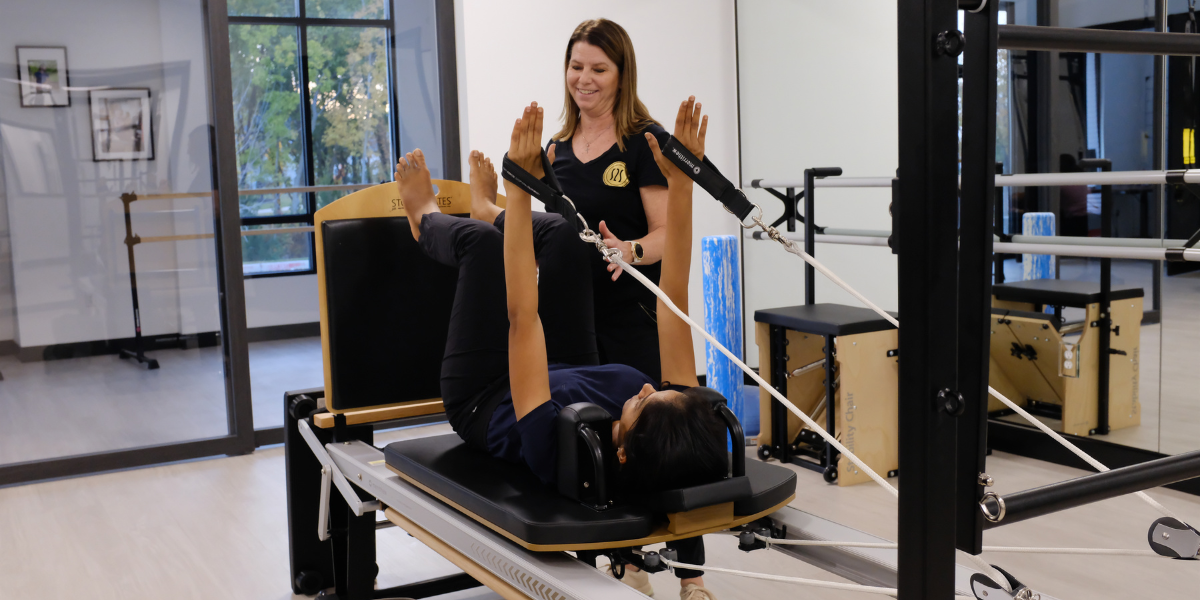
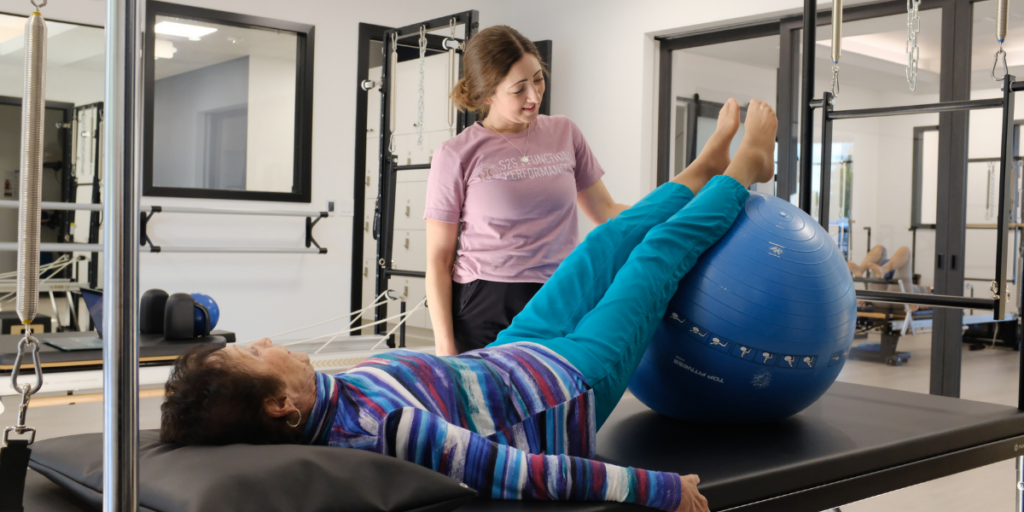
For many patients, integrating Pilates equipment and methods directly into rehabilitation is a particularly effective strategy — using the reformer, cadillac, and other precision-based apparatus to build the deep hip and core stability that takes stress off the knee joint without aggravating it.
Private sessions allow your therapist to closely monitor your form, adjust your plan in real time, and move at a pace that matches both your progress and your comfort. Every treatment plan is built around you, your body, your history, your goals, and your lifestyle.
How Does S2S Functional Performance Help You Move Without Pain?
S2S Functional Performance brings a higher standard of care to physical therapy in Frisco. With a lower patient-to-therapist ratio than most clinics, board-certified therapists, and a performance-driven philosophy, we focus on understanding why your knee hurts not just where.
Our comprehensive movement evaluations assess knee mechanics, hip control, foot alignment, and core stability together as a connected system. From there, we build a personalized plan that may include manual therapy, progressive strengthening, movement retraining, and a carefully timed transition into our Pilates studios, where precision-based equipment work continues to build the stability your knee needs long after formal therapy ends.
We work collaboratively with your physicians and other providers to ensure continuity of care, and we prioritize education so you understand your body, know your triggers, and have the tools to stay well independently. We don’t just help you walk up the stairs again, we help you do it stronger and more confidently than before.
Ready to Stop Dreading the Stairs?
Knee pain during walking or stair climbing is not something you have to accept as a permanent part of your life. With the right diagnosis, the right treatment, and the right team behind you, lasting relief is absolutely achievable.
At S2S Functional Performance, our Frisco physical therapy team is ready to evaluate your movement, identify the root cause of your knee pain, and build a personalized plan that takes you from pain to performance.
Frequently Asked Questions
1. Can pilates classes in Frisco really help with knee pain?
Pilates focuses on building deep hip, core, and leg stability through controlled, low-impact movement, precisely the kind of strength that reduces stress on the knee joint. Our therapists often incorporate Pilates equipment and methods directly into your rehabilitation sessions before transitioning you into our Pilates studios in Frisco for long-term maintenance and performance.
2. How do private sessions differ from standard physical therapy appointments?
Private sessions offer exclusive one-on-one time with your therapist, allowing for a more detailed assessment of your movement patterns, real-time feedback on form, and a highly individualized treatment progression. For knee conditions where mechanics play a major role, this focused attention can significantly accelerate recovery.
3. Is knee pain from stair climbing always a structural problem?
Not always. Many cases of stair-related knee pain stem from muscular imbalances, poor hip control, or movement mechanics rather than structural damage to cartilage or ligaments. A thorough movement evaluation is the only way to determine what is actually driving your symptoms and that is exactly where we start at S2S Functional Performance.
4. How long does it take for physical therapy to relieve knee pain?
Most patients begin experiencing noticeable improvement within three to six weeks of consistent physical therapy, depending on the severity and duration of the problem. Our team provides clear progress benchmarks so you always know where you stand and what comes next.
5. Can I use your pilates studios even if I am still in the middle of physical therapy?
Yes, in many cases. Our integrated model means that Pilates equipment-based work can complement your rehabilitation from an early stage, particularly for low-impact strengthening and mobility work. Your therapist will advise on the right timing and level of participation based on your individual progress.